The 7 ahruf
- Religionlover19
- Topic Author
- Offline
- Junior Member
-

- Posts: 26
- Thank you received: 2
I read from Sunni sources that the 7 recitations are based on the “7 ahruf”, however what the 7 ahruf is heavily debated in sunnism. Does Zaydism offer any clarity on the matter? What are the 7 ahruf?
I also have another question, in surat Almaida (5:6), for qirat Hafs we conclude that we must wash the feet, for Qirat Nafi we conclude that we must wipe the feet. What’s the wisdom behind this difference?
Please Log in or Create an account to join the conversation.
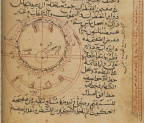

It is stated in al-Asas (the main book of theology in our school):
(The Book) previously mentioned, which is the first of the evidences: (is the Qur’an). It was called Qur’an because of “gathering” and “bringing together,” since it consists of collected verses. (And its recitation is mass-transmitted) among the Muslims.
(And the authority relied upon by our Imams (the Ahl al Bayt) is the recitation of the people of Madinah) which is the recitation of Nāfiʿ ibn ʿAbd al-Raḥmān ibn Abī Nuʿaym, the client of Juʿūnah ibn Shuʿūb al-Laythī, the ally of Ḥamzah ibn ʿAbd al-Muṭṭalib. His origin was from Isfahan; his kunya was Abū Ru’aym, and he died in Madinah in the year 169 AH. This was mentioned by the author of al-Taysīr.
He (the author) said: al-Hādī said: (And no other recitation is mass-transmitted) meaning: other than the recitation of the people of Madinah; according to him, the remaining recitations are not mutawātir.
Al-Murtaḍā li-Dīn Allāh Muḥammad ibn Yaḥyā said in al-Īḍāḥ: “The best of the recitations is that which Allah azza wa jall revealed. This difference in the recitations is due to over-scrupulousness by some people and seeking leadership. The soundest and most firmly established recitation is that in which no disagreement occurs. Thus, the recitation of the people of Madinah, because most of the Qur’an was revealed in their land, and they took it from the Messenger of Allah ﷺ through direct instruction and explanation, is the recitation that Allah revealed to His Prophet ﷺ, not deviating from a single letter. It is our recitation, we adopt it, rely upon it, and it is the one we learned from our predecessors.”
The majority, however, said: All seven recitations are mutawātir, and they are:
the recitations of Nāfiʿ, Abū ʿAmr(1), al-Kisā’ī, Ḥamzah(2), Ibn ʿĀmir(3), Ibn Kathīr, and ʿĀṣim.
[END OF QUOTE]
As for your second question:
As far as i know there is no wiping that you can conclude from the qiraat al-nafi. I think your confused it with something else.
Please Log in or Create an account to join the conversation.
- Religionlover19
- Topic Author
- Offline
- Junior Member
-
- Posts: 26
- Thank you received: 2
Thank you for your reply Ibn Kamal. I still have two concerns that I hope you help me out with.
1- What about the ahaadith about how the qirat are based on the ahruf (احرف), what do the zaydis say about them? That is my main interest because the Sunnis struggle to define what the 7 ahruf are.
2- My second concern would be that some of the qirat like the qiraa of Ibn Kathir and Shu’bah read in the verse "ارجلِكم" instead of "ارجلَكم", hence the qirat of Ibn kathir and Shu’bah linguistically say to wipe not to wash. So how can all be considered mutawatir by the majority as you said? And if so what is the حكمة behind a few of the qirat saying to wipe and a few that say to wash?
Jazakallahu khayran kathira
Please Log in or Create an account to join the conversation.
On your first concern, this is from Sharh al-Asas:
“And the Qur’an was revealed upon seven aḥruf for the sake of ease”,
meaning: for the purpose of lightening the burden and facilitating (recitation).
Then the scholars differed, and it was said (by the majority): What is meant by the ‘aḥruf’ are seven Arabic dialects, that is, it was revealed according to the dialects of seven Arab tribes.
It was also said: Rather, what is intended are the meanings of the legal rulings: the lawful and the unlawful, the definitive and the ambiguous, the parable, the imperative, and the declarative.
And it was said: (They are) the abrogating and the abrogated, the general and the specific, the unelaborated and the clarified, and the interpreted.
And it was said: other interpretations.
And it was said: The intention behind “seven aḥruf” is not the actual number, but rather expansiveness and ease for the reciter—as if the meaning were: “It was revealed in a broad and accommodating manner, so that the reciter may read it in many forms.”
For sometimes a number is not meant literally, as in the verse of Allah Most High:
“If you ask forgiveness for them seventy times…” (Qur’an 9:80),
and as in the poet’s saying:
“I shall confront al-ʿĀṣ and the son of al-ʿĀṣ
in seventy ways, with forelocks bound.”
The most apparent of these statements is the first, because the Arabic language itself is called a “ḥarf” (dialect) in the language of the Arabs.
[END OF QUOTE]
As you can see, Sharḥ al-Asās does not present a single definitive Zaydī opinion. It mentions only the majority view and other possibilities. Thus, this question remains open to discussion, and there is no unanimously established answer. Nonetheless, the excerpt does highlight interesting points, such as the idea that the number seven may not be literal.
Regarding your second concern:
From the viewpoint of the majority, a single reading implying wiping would not serve as conclusive proof. Fiqh does not operate on a single reading alone.
The sources of rulings are always:
The Qur’an
The Sunnah
The understanding of the early Muslims, especially the Ahl al-Bayt
Reason (ʿaql)
Thus, a verse where one reading implies wiping would only be one piece of evidence among many.
A mujtahid would weigh all the proofs and reasonings to derive a ruling.
For us Zaydīs, as Imām al-Hādī, ʿalayhi al-salām, stated
The reading of Nāfiʿ is our pivotal, main pillar.
Therefore, another reading does not constitute strong evidence for us.
Wa al-salām
Please Log in or Create an account to join the conversation.
- Religionlover19
- Topic Author
- Offline
- Junior Member
-
- Posts: 26
- Thank you received: 2
Brother Ibn kamal, it still is not clear how they may all be authentic yet the meaning of the ayah changes? Do you mind further elaborating on how that’s possible? Seeing that Nafi says to wash and some of the other qiraat say to wipe, does it mean that Nafi is accurate and the other qiraat are wrong?
An argument I heard before is that there is wisdom in such differences, meaning you’re supposed to wash in some cases and wipe in others (like over leather socks for the Sunni brothers).
Furthermore, is there any Zaydi resources that define the seven dialects (ahruf)? Or in other words, how much the dialect can impact the recitation and how much is allowed to be changed. Another difference between the recitations for example is "مالك يوم الدين" may be recited as "ملك يوم الدين" hence the meaning changes but the wisdom behind it is that god is both king and owner of the day of judgement. Such difference seems to be allowed, however how far can we take these differences? Can the words malik and ma’alik be interchanged wherever the context allows it?
Please Log in or Create an account to join the conversation.
Asalmualaykum,
wa alaikum as-salam,
You may need some additional background to understand what the scholars mean when they describe certain Qur’anic readings as mutawātir.Brother Ibn kamal, it still is not clear how they may all be authentic yet the meaning of the ayah changes? Do you mind further elaborating on how that’s possible? Seeing that Nafi says to wash and some of the other qiraat say to wipe, does it mean that Nafi is accurate and the other qiraat are wrong?
Tawātur refers to a level of transmission so widespread and continuous that it becomes impossible to assume it was fabricated by any individual or group.
A simple analogy is the existence of Tokyo: even if someone has never visited it or seen it in pictures, the consistent reports about it from countless independent sources make its existence undeniable. This is what scholars mean when they apply tawātur to a qirā’ah (Qur’anic reading) or a ḥadīth.So when scholars say, “These readings are mutawātir,” they do not mean:
Rather, they mean:“All these readings must be identical or free from differences.”
In other words, mutawātir refers to the authenticity of their transmission, not the absence of variation between them.Regarding differences between readings: according to the majority view, Allah allowed multiple forms of recitation so long as the changes do not drastically alter the meaning or disrupt the intended message. These variations fall under the concept of the seven aḥruf, forms of recitation permitted for this Ummah to accommodate the linguistic differences among the Arab tribes.“Each of these readings is authentically traced back to the Prophet ﷺ through a transmission so widely attested that fabrication is impossible. Therefore, all of them are valid, divinely sanctioned readings.”
For example: the well-known variation between reading the verse as referring to washing versus wiping arises from a small vocalic difference. Reading it with an “a” ending implies washing, while reading it with an “e” ending links the word to the preposition bi-, indicating wiping. Although the difference in sound is minor, it has a significant grammatical impact on the interpretation of that verse.
What, then, is the underlying wisdom here? If we adopt the view that the 7 Ahruf were revealed to accommodate different dialects, it would suggest that the variations in vocal endings are not due to differences in grammatical understanding. Rather, they reflect the natural pronunciation preferences of different tribes—such as using an “e” sound instead of “a” while conveying the same meaning. Consequently, recitations that use the “e” sound do not necessarily imply the act of wiping. Instead, our interpretation of it as indicating wiping may be a misconception arising from our attempt to analyze the text strictly through the lens of grammar.
As for the reading of Nāfiʿ:
According to Imām al-Hādī ilā al-Ḥaqq, Yaḥyā ibn al-Ḥusayn ibn al-Qāsim ibn Ibrāhīm (ʿalayhim al-salām), the recitation of Nāfiʿ is the only mutawātir reading. In his view, the other readings are not authentically transmitted, and thus are not valid even if people practice them. Most Zaydis follow this opinion, while maybe a small minority do not, and it is a central doctrine of the madhhab.
That is one possible explanation. The topic of the seven aḥruf is complex, and over time many different interpretations have been proposed. Finding the view you consider correct ultimately depends on your own study and on which position you find the most convincing.An argument I heard before is that there is wisdom in such differences, meaning you’re supposed to wash in some cases and wipe in others (like over leather socks for the Sunni brothers).
As for me personally, I follow the opinion of Imām Yaḥyā (ʿalayhi as-salām), and I understand the seven aḥruf as referring to the ease and breadth granted in recitation, an allowance that made reading accessible for the various linguistic abilities of the early Muslim community.
We Zaydis also have our own works on these subjects. However, as I mentioned in another discussion, Zaydism has never been isolated from the broader landscape of Islamic scholarship. We share many texts, scholarly opinions, and developments in the Islamic sciences with our brothers from Ahl al-Sunnah as well as with other Muslim groups. Because we draw from many of the same sources, our positions often align, and at times we even cite the very same references.Furthermore, is there any Zaydi resources that define the seven dialects (ahruf)? Or in other words, how much the dialect can impact the recitation and how much is allowed to be changed. Another difference between the recitations for example is "مالك يوم الدين" may be recited as "ملك يوم الدين" hence the meaning changes but the wisdom behind it is that god is both king and owner of the day of judgement. Such difference seems to be allowed, however how far can we take these differences? Can the words malik and ma’alik be interchanged wherever the context allows it?
The only major sect that developed along a distinctly separate path is the Imāmiyya. This is largely due to features within their doctrine. Historically, many of them adhered to Akhbārism, meaning they did not develop a full juristic methodology (fiqh) but relied primarily on transmitted reports from their Imams for legal rulings. In addition, their practice of taqiyya, avoiding open debate with outsiders, further limited their engagement with the wider Muslim scholarly tradition. As a result, their doctrines in various fields evolved differently and is disconnected from the more general Muslim discourse.
This is not meant as praise for them, indeed, we believe they are misguided on many points, but simply to clarify that we Zaydis differ from them in this particular aspect.
wa salam
Please Log in or Create an account to join the conversation.
- You are here:
-
Home

-
Forum
-
Questions
-
Quran Questions (Exegesis, Commentaries, Recitations)
- The 7 ahruf