- Forum
- Questions
- Jurisprudence Questions
- doesn't exluding modesty laws for slave women go against prophetic command?
doesn't exluding modesty laws for slave women go against prophetic command?

I hope this post finds everyone well. I've come across a ruling where slave women excluded or prevented from veiling. Perhaps showing their face and hair to unrelated men with some scholars even allowing them to be bare breasted. I find this hard to make sense of considering the punishments mentioned by the prophet pbuh in regards to women who show off their beauty. The following is what seems to contradict the notions:Umay’mah, the daughter of Ruqay’ah came to the Messenger of Allah (صَلَّى اللّٰهُ عَلَيْهِ وَسَلَّم) to acknowledge the message of Islam and that he (صَلَّى اللّٰهُ عَلَيْهِ وَسَلَّم) is the Messenger of Allah. The Prophet (صَلَّى اللّٰهُ عَلَيْهِ وَسَلَّم) told her:Umay’mah, the daughter of Ruqay’ah came to the Messenger of Allah (صَلَّى اللّٰهُ عَلَيْهِ وَسَلَّم) to acknowledge the message of Islam and that he (صَلَّى اللّٰهُ عَلَيْهِ وَسَلَّم) is the Messenger of Allah. The Prophet (صَلَّى اللّٰهُ عَلَيْهِ وَسَلَّم) told her:“I give my acknowledgment that you must not set partners to worship besides Allah and that you don’t steal or commit fornication and adultery, that you don’t kill your child, that you don’t commit any falsehood before your hands and between your legs, that you don’t wail, and that you don’t make Tabarruj like that of Jaahiliyyah“ (24).
“There shall be, in the latter part of my nation, women who are dressed but (in fact) naked, on their heads are humps like those of Bukht (one kind of camel), curse them for they are surely cursed.”(25)
“The best of your women is the affectionate , the fertile (in productivity), the propitious (favorable), the consultative if they fear Allah. The Most evil of your women are the Mutabar’rijat (those who do Tabarruj), the Mutakhayelat (who strut/swagger), and they are the hypocrite ones. Those who enter Al-Jannah are like the Cough Crow.” (28)
“Any woman who takes off her clothes in other than her husbands home (to show off for an unlawful purpose), has broken the shield between her and Allah.” (29)
(24) Related by Imam Ahmed in his “Mussnad” 2/196. The scholar Ahmed Shaker, may Allah’s Mercy be upon him, said : “Its chain of narration is good”. He also said that Ibn Katheer in his “Tafseer :Explanation of the Qur’an 8: 327-328″ mentioned this hadeeth saying, “its chain of narration is good” and he related it to At-Tirmidhi, An-Nissa’ee and Ibin Majah.
(25) At-Tabarani related this hadeeth in “Al-Mu’jam As-Sagheer” p.232 and Al-Albani said it Saheeh as in his book “The Hijab” p.56. As-Suyouti related on behalf of Ibn Abdul’Barr that: “The Prophet (صَلَّى اللّٰهُ عَلَيْهِ وَسَلَّم) intended women who put on light clothes that shows off and shapes the body descriptions. In reality they are naked although they have clothes on them! “.
(28) Reported by Al-Baihaqi in “As-Sunan” V.7 p.82. Also reported by Abu Na’eem in “Al-Hiliyah” V. 8, p. 376 with a reference to Abdullah bin Masoud (رضي الله عنه) as the narrator. See also Al-Albani’s “Chain of Authentic Hadeeths – Arabic” # 1849 and 632.
(29) Related by Imam Ahmed and Al-Hakim in his “Mustadrek” (Arabic) V.4, p.288 who said it is Saheeh (authentic) according to the conditions of Muslim and Al-Bukhari, and Ad-Dahabi agreed as well as Ibin Majah.
Here the hadiths mentioned prevent a women from committing tabbaruj and displaying themselves but is not uncovering the hair, chest, breast by slave women also displaying themselves and and a commitment to tabbaruj? furthermore what in they way of perfuming or wearing ornaments in the marketplace for prospective buyers (separate hadiths I found) is that not also tabbaruj?
Jazak allah khair
Please Log in or Create an account to join the conversation.
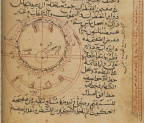

first of all before i answer your question on it being contradictory or not, let us see how the matter of the awrah is handled among the zaydiyya.
It is stated in التاج المذهب لأحكام المذهب by
أحمد بن قاسم العنسي, on the question of the awrah of the mahram:
“It is also forbidden for the accountable person to look at the severe ʿawrah (al-ʿawrah al-mughallaẓah, like her private parts) of his maḥram whether the maḥram relationship is by lineage, fosterage, or marriage ties. Likewise, it is forbidden to look at the stomach and the back, meaning that which is parallel to the stomach and chest (meaning her back from the shoulders down to the part which is parallel to the stomach). It is also forbidden to look under the armpit, by giving precedence to the side of prohibition (that is precaution).
But it is permitted for him to look at her places of adornment other than that, which are: the two hands up to the shoulders, the two legs up to the knees, the chest and the breasts, and the head and its hair.
And whatever is permissible to look at from the maḥārim is also permissible to press, touch, or apply oil to all of that being without desire.
This is the ruling of the woman’s ʿawrah with her maḥram.
As for his (the man's) ʿawrah with her, it is like the ʿawrah of men with each other, since it is customary among Muslims that they do not cover their backs and stomachs from their maḥārim. The same applies to the female slave, the mudabbara, the umm walad, and the mukātaba: their ʿawrah is like that of a man with another man, so long as he is safe from desire.
wa salamu alaikum
Please Log in or Create an account to join the conversation.
First, you have to understand that there is a distinction in the Shariah between Al-Mughallazah (المغلّظة), literally “the severe” or “major” ʿawrah, and Al-Mukhaffafah (المخففة), literally “light” or “less severe” ʿawrah. What is counted as mughallazah or mukhaffafah is determined by the relationship.
So if you look at a person, looking at a certain body part could be considered looking at a not-allowed mughallazah part, while the same look at another person would be counted as mukhaffafah. It depends on the relationship itself.
Second, modesty is something that has changed greatly with time and culture. Especially with the coming of modernity, the Muslim world became influenced by Western ideas of modesty, and some things which were not considered “bad” in the past are now judged differently.
An example is the breast. As you can see from the excerpt, a mahram can actually look at the breast of his mahram, as long as it is done without desire; it is not counted among the “unmodest” parts of the body. With cultural change in the Muslim world, this would now be frowned upon by many people but that is not because the Shariah is wrong; it is because the understanding of modesty and body parts changed. While the breast was not considered a “sexual” object of desire in the past for most people, it is now commonly viewed as something that should only be seen by a husband or people of the same gender, excluding all mahram like father, brother, or son.
This difference in perception is something we can also see across cultures. For example, in Japan, people often bathe naked together and do not view it as sexual or taboo.
Please Log in or Create an account to join the conversation.
If you read until this point, i say to you: JazākAllāhu khayran for your sincerity in seeking to understand this matter.
Now let us shift the discussion toward the real issue (contradiction or not):
You mentioned that it seems contradictory that slave women would not be required to veil, while we have stern warnings against tabarruj. The first mistake here is to make this about whether it is “modest” or not and being in crontadiction to the ahadith. The discussion on modesty is subjective so what one person calls modest, another may call immodest. The Sharīʿah, however, is not built on people’s feelings or perceptions, but on divine guidance, nuanced legal reasoning, and the totality of revealed proofs.
So the question is not: “Isn't this contadictory? Isn't this unmodest?”
The real question is: “What does Allah and His Messenger ﷺ require, in light of the full body of evidence?”
One of the most important principles in our dīn is that some rulings are restricted, specified, or qualified by other rulings. A verse in the Qur’ān might establish a general principle, and then a ḥadīth will specify exceptions. Or one report may seem to give an absolute ruling, but another narrows its scope. This is why the scholars never allowed laypeople to derive rulings directly from Qur’ān and Sunnah because without full knowledge of all texts, language, and principles, you will see only part of the truth and draw the wrong conclusion.
Imagine someone looking at a massive building, but he stands in a corner where he can see only one wall, a small portion of it, and only with his eyes no touch, no sound, no movement around the building. He insists: “This is what the building looks like!”
Of course, he is wrong not because he lied, but because he only saw one piece. To truly know what the building is, he needs to walk around it, look from every angle, use all his senses, maybe even look at the architectural plans.
The Sharīʿah is exactly like this. A single verse, a few aḥadīth even if authentic do not by themself give you the full ruling. To reach the truth, you must bring all the proofs together, weigh them, understand their contexts, know which are general and which are specific, which are abrogated and which are not.
You cited ḥadīth warning against tabarruj, which is absolutely correct. But the same Sunnah contains detailed rulings about slaves, free women, differences in legal status, societal circumstances, and other matters. Those rulings don’t deny modesty they reflect a nuanced, situational application of modesty.
That is why the scholars of the past concluded what they did. It’s not because they thought immodesty was allowed, but because, in that legal and social context, certain commands applied differently, modesty was understood differently. Without full access to the whole “building” of evidence, it looks like contradiction. But to a scholar who sees all sides, it is a consistent, coherent structure.
Our role as muslims is to seek knowledge, trust the qualified people of knowledge, and avoid reducing Sharīʿah to what seems “logical” or “modest” to us alone.
I hope this helps clarify why what might look like a contradiction at first is, in reality, not a contradiction at all.
wa salam
Please Log in or Create an account to join the conversation.
Please Log in or Create an account to join the conversation.
jazakallah khair for your response.
wa iyyak akhil kareem,
Exactly brother, it isn't a universal matter because the scope of what tabarruj is changes according to the context.Just to be clear, When the prophet pbuh mentioned those women who commit tabbaruj like the jahilliyah being cursed or punished for that perhaps unveiling outside their husbands homes, this isn't a universal matter but one that pertains to only free women in light of other hadiths?
An free women would do tabarruj by walking around showing of her hair and her neck and so on.
An slave women would do tabarruj by showing of places beneath her belly.
If that is the case then slave women would be allowed to perhaps dress in a sense that would resemble women in the jahiliyah without sin?
I do not understand what you mean by dressing that would resemble the women in the jahiliyyah. if you mean, that they can show of their hair and breast, yeah they can do that because that is not counted as the area which is forbidden to look at or to show in accordance to her status as a slave but if you mean things like how the women made hajj in the time of jahiliyyah almost naked because their clothing had holes in it that is not allowed.
First: If she is showing a place which is forbidden to look at (like her private parts), then yes, they have to lower the gazes.Do verses of lowering the gaze still apply to men looking at slave women?
Second: If he looks with desire, than he is not allowed to look at her, even if the parts were actually not part of her awrah according to the shariah.
So if a guy likes breasts in a sexual sense and has desire than he cannot look at the slave women's or even his mahram's breast.
The veiling laws have been revealed especially for free women, thats the entire point.What then is the hikma for the difference in veiling laws?
Unfortunately many brothers and sisters and by extension kuffar think that these laws are for all women in general.
Actually these laws are for free women. And it is actually honoring the women while the Kuffar think it is degrading them.
That shows again how much culture can change the perception.
The hikmah is protection of the free womens honor and body. It is about protecting the social structure and family in the muslim ummah.
The order to lower your gaze is firstly so that muslim men dont get the wrong ideas and that they avoid zina, fitna and corruption.I understood initiallly that it creates a barrier against male gaze and fitna , zina and corruption. Wouldn't allowing them to uncover do the opposite?
So what is zina, fitna, and corruption:
Zina: Sex which is not allowed by Allah
Fitna: That word has a negative meaning in our times but in the past it was more neutral, its actuall meaning was more lin line with: test, trial, or process of purification.
Corruption: The word in arabic is fasad meaning: corruption, ruin, social/moral decay.
So that you understand: Sex is nothing bad inherently, what Islam forbids is unlawful sex, called zina. Fitna and Corruption are general words which can denote to different thing depending on the context, so slave women walking around with open breasts werent seen as fitna or corruption, but doing zina, trying to seduce or look at women which arent allowed to you was seen as fitna and corruption.
Your understanding is incomplete, i recommend to you, if you have the time and resources, to study islamic law, put studying ahadith aside for they are mostly for the scholars not the laymen. after you achieved more knowledge on the fiqh you could go back to study ahadith.Was my understanding wrong?
wa salam
Please Log in or Create an account to join the conversation.
- Forum
- Questions
- Jurisprudence Questions
- doesn't exluding modesty laws for slave women go against prophetic command?
- You are here:
-
Home

-
Forum
-
Questions
-
Jurisprudence Questions
- doesn't exluding modesty laws for slave women go against prophetic command?