istinja in wudu
I have seen in some sources that it is required to perform istinja and istibra as part of wudu according to the Madhab Ahl-al Bayt. Is this correct? What is the evidence for this ruling?
Please Log in or Create an account to join the conversation.
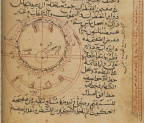
there is much proof on that matter, even in the Musnad of Ibn Hanbal:
‘Abdullah narrated to us my father (Ahmad ibn Hanbal) told me Hasan told us Ibn Lahi‘ah narrated from ‘Uqayl ibn Khalid, from Ibn Shihab (al-Zuhri), from ‘Urwah, from Usamah ibn Zayd, from his father Zayd ibn Harithah, from the Prophet ﷺ:
Gabriel (peace be upon him) came to him at the beginning of the revelation, and taught him the ablution (wuḍū’) and the prayer.
When he finished performing the ablution, he took a handful of water and sprinkled it over his private part.
As for how the argumentation for it goes, here an excerpt from the hawashi/footnotes in
the famous Sharh al-Azhar by al-Shaykh Ibn Miftah radiyallahu anh on this matter:
(2) The evidence that the two private parts (the genitals) are among the organs of ablution (wuḍū’) is the hadith of Gabriel, in which the Prophet ﷺ said:
“My brother Gabriel took a handful of water and sprinkled it over my private part.” (As cited by al-Su‘ayṭarī).
(*) The evidence for washing the private parts is what was narrated in the Asānīd al-Yahawiyyah from al-Hādī ilā al-Ḥaqq Yahyā ibn al-Ḥusayn, with his chain of transmission to ‘Alī (alayhi as-salam):
That when he would prepare his ablution water, he would say: “In the name of Allah, by Allah, and upon the way of the Messenger of Allah,” then he would wash his private parts and say:
“O Allah, guard my private part from disobeying You,” and so on through the rest of the supplication.
Another proof is that it was narrated that Imam al-Hādī was asked:
“Is istinjā’ (cleansing the private parts) an obligation among the obligations of purification?”
He replied: “Yes, it is the greatest of the obligations of purification.”
And he also said:
“If ablution is broken by vomiting or nosebleed, one should begin the purification from istinjā’.”
(From Ḥadā’iq Yāsamīn).
(*) Issue:
According to al-Hādī and his descendants, the two private parts are among the limbs of ablution, based on the Hadith of Qubā’ (Baḥr).
It is related from the Ḥāshiyat al-Baḥr of Sayyid Muḥammad ibn ‘Izz al-Dīn al-Muftī that:
“There is no decisive proof in the Hadith of Qubā’, as the book itself indicates.
The stronger evidence for their obligation is what is narrated in Jāmi‘ al-Uṣūl, where it says:
‘Al-Bustī reported from al-Ḥākim ibn Sufyān that the Prophet ﷺ, when performing ablution, would take a handful of water and sprinkle it over his private part.’
In another narration: ‘he rubbed (raḍakha) his private part’;
in another: ‘he rubbed his private part thoroughly’.
And al-Tirmidhī narrated from Abū Hurayrah that the Prophet ﷺ said:
“Gabriel came to me and said: O Muhammad, when you perform ablution, sprinkle (water).”
And it is narrated in the Muwaṭṭa’ from ‘Abd al-Raḥmān ibn ‘Abd Allāh, that he heard ‘Umar ibn al-Khaṭṭāb perform ablution, and he took water and washed what was beneath his waist wrap.
This was recorded in the Muwaṭṭa’.
Some of these evidences are sufficient for argument, and the issue is considered one of probable (not certain) rulings, since our scholars have used less than this as proof in many matters.
(*) Benefit:
Does the upper part of the private area become purified by washing even if the urine has not yet dried, or not?
The apparent wording of al-Hādī in al-Muntakhab indicates that it is purified by washing, and that the water cuts off (neutralizes) the urine.
But some have said: it does not become purified unless washed after drying, and this is indicated by al-Mu’ayyad bi’llāh in al-Ziyādāt.
(*From the book Gharā’ib al-Masā’il).
(*) Note:
The apparent position of the school is that washing the two private parts is obligatory in every case that necessitates ablution whether due to passing wind, vomiting, bleeding, or other causes since they consider them among the limbs of ablution.
As for the hadith attributed to the Prophet ﷺ:
“He is not one of us who performs istinjā’ after passing wind,”
the scholars have declared it weak, and Ibn al-Jawzī even listed it among the fabrications.
And if it were assumed authentic, it would be interpreted to mean:
“He is not one of those who follow our law who does so believing it to be obligatory other than for prayer.”
(From Sharḥ Bahrān, verbatim.)
(*) As for the place of intercourse in a woman, it is not obligatory to wash it. (al-Su‘ayṭarī).
(*) Know that washing of these parts follows the same order as other acts of washing:
first with rubbing, and if that is not possible, then pouring (water);
if that is not possible, then wiping or immersion.
Addendum:
(*) هو سليمان بن يحيى بن محمد بن علي الصعيتري وهو ابن بنت الفقيه حسن النحوي، توفي سنة ٨١٥ هـ.
He is Sulaymān ibn Yaḥyā ibn Muḥammad ibn ʿAlī al-Ṣuʿayṭarī, the son of the daughter of the jurist Ḥasan al-Naḥwī.
He passed away in the year 815 AH (approximately 1412 CE).
Please Log in or Create an account to join the conversation.
Please Log in or Create an account to join the conversation.
- critselfcrit
- Offline
- New Member
-

- Posts: 3
- Thank you received: 1
Is this sunnah or is it considered fard? Given that the Quran does not mention it in the steps for wudu.
JZK
Please Log in or Create an account to join the conversation.
- Misbahuddin
-
- Offline
- Elite Member
-

- Posts: 200
- Thank you received: 17
It is obligatory to wash the both openings before starting the Wudhoo.
Please Log in or Create an account to join the conversation.
does this exist in any other school of thought?
Also, do I have to be covered when performing wudhu as in can I perform it in the shower ?
Jazakallah
Please Log in or Create an account to join the conversation.
- You are here:
-
Home

-
Forum
-
Questions
-
Jurisprudence Questions
- istinja in wudu