Question on saintly miracles and mysticism

Please Log in or Create an account to join the conversation.
- Imam Rassi Society
-

- Offline
- Moderator
-

Numerous miracles have been attributed to our imams (as) in the books of biography. That being said, we don't hold the performance of such miracles to be a proof of their imamate. We simply say that such is a result of their status with Allah--something that can take place for non-Descendants as well. Even then, the affirmation of such reports do not constitute a required cardinal belief of Zaydiyya. I know of no English books on the matter.
As for mysticism, it would depend on what you mean. If by that, you mean the pursuit of spirituality through established means, then yes. But if by such, you mean esoteric and hidden interpretations and weird practices, then no.
And Allah knows best!
IRS
Please Log in or Create an account to join the conversation.

refer to this thread too:
salvationark.com/salvationark1/index.php...-the-zaydi-tradition
What do you mean with mysticism exactly?
--Living while focusing on Ibadah and Zuhd?
Or:
--Adhering to a Tariqa, Shaykh and a Minhaj for tazkiyya?
Or:
--Adhering to the theology/philosophy of Ibn Arabi and the sufis who follow him?
wa salam
Please Log in or Create an account to join the conversation.
By mysticism I mean experiencing a direct personal union with Allah internally, with the soul, by purifying the heart and with dhikr. Is there a way to do this without bidah? Any established Zaydi methods or books on it in English?
Please Log in or Create an account to join the conversation.
akhil kareem,
a personal union with Allah is impossible and that concept is actually foreign to Islam.
While it has been discussed in early islamic times it was never counted as a direct "desired status" which you should achieve.
The scholars which focused on Tazkiya/Personal Religious Development, called this state al-Wajh and clearly stated that it was an byproduct
of the path of the seeker. It happens without their will and is not regarded as anything "desireable", later in the middle ages it got sometimes pushed and promoted as something good but originally, no, it was (and is) a form of loosing oneself and thus weakness. In essence it is loosing oneself and believing oneself to be part of Allah or in union with him, but that is an state of delirious mental breakdown, not something positive.
No one can achieve a personal Union with Allah, in the sense that you somehow merge your essence with him.
If you mean by personal union "becoming the embodiement of the will of Allah" than that would be in accordance with Islam.
About purifiying the heart:
If you want to do that without bidaa you would have to look in the books of fiqh, in the chapters of ibadaah.
As for books:
There are many zaydi books on tazkiya/zuhd but unfortunately most of them are in arabic, i do not know of any english translations
The books of our school are in contrast to the sufi books much more sober.
Some of them:“The Policy of the Disciples,” by Imam al-Mu’ayyad Billāh Ahmad ibn al-Husayn al-Hārūnī (d. 411 AH)“The Life of Hearts in Reviving the Worship of the Knower of the Unseen,” by Imam Ahmad ibn Yahyā al-Murtaḍā (d. 840 AH)“The Fountain of Happiness,” by ʿAlī ibn Muḥammad al-ʿAjrī (d. 1407 AH)
“Guidance to the Salvation of the Servants,” by ʿAbd Allāh ibn Zayd al-ʿAnsī (d. 667 AH)
This is an excerpt from the fountain of happiness:
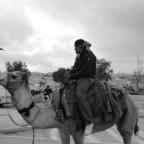
Among them was the jurist of the family of the Messenger of Allah, peace and blessings be upon him and upon them — ʿĪsā ibn Zayd ibn ʿAlī alayhi as-salam:He was called al-Mukhtafī (“the Hidden One”) because he remained in concealment for a long period. It is related that during his concealment, he used to draw water with the water-carriers using his camel, and they did not recognize him. He was extremely pious and scrupulous.It is narrated in the books of Abū al-Faraj with a chain of transmission to ʿAlī ibn Jaʿfar, who said:
“My father told me that he once entered upon ʿĪsā ibn Zayd while he was eating bread and cucumbers. He offered me two loaves of bread and two cucumbers and said to me: ‘Eat.’ So I ate one loaf and half of the other with one and a half cucumbers until I was full and left the rest.After a few days, I came back to him, and he brought out the leftover piece of bread and half of the cucumber, which had become stale, and said to me: ‘Eat.’
I said: ‘What is this that you have kept for me?’
He replied: ‘Because I had given it to you as a gift, it became your property. You ate part of it and left part of it so eat it now if you wish, or give it away in charity.’
Such scrupulousness (waraʿ) is not found in anyone else. May Allah benefit us through him and his forefathers.”And from Yaḥyā ibn al-Ḥusayn ibn Zayd, who said:
“I said to my father: ‘I wish to see my uncle ʿĪsā.’
He replied: ‘That would cause him hardship, and I fear he might move from his place lest he be discovered. But when you reach Kūfa, ask about the houses of Banū Ḥayy, and sit at the beginning of such-and-such a street, for he will come to you at sunset a middle-aged man described such and such, with the mark of prostration on his forehead, drawing water on a camel. He does not place a foot nor lift it except that he remembers Allah, exalted be He.When you greet him, he will be alarmed by you, so tell him who you are, perhaps his heart will be at ease.’So I did as he said. When I greeted him, he was startled, as wild animals are startled by humans. I said: ‘Uncle, I am your nephew.’ He embraced me and wept until I feared his soul would depart. Then he made his camel kneel and began asking me about each of his family members man by man, woman by woman, and child by child and I answered him while he wept.Then he said: ‘My son, I draw water with this camel. I give the camel’s hire to its owner and live off the rest.’In another narration he said: ‘Sometimes I am hindered from drawing water, so I go out into the open land at night, behind Kūfa, and gather the herbs that people throw away and live off them.’Then he made me swear never to return to him, bid me farewell, and he passed away while in concealment.May Allahs’s blessings, peace, and honor be upon him. Āmīn.”
Wa salam
Please Log in or Create an account to join the conversation.
- Imam Rassi Society
-
- Offline
- Moderator
-
I think that what Ustaadh Ibn Kamal said is sufficient; however, I want to also point out that (shameless advertising

Here is an excerpt from one of his treatises on spirituality:
All of that withstanding, it should be known that the performance of miracles or supernatural mystical experiences should not be the goal of the aspirant. Rather, taqwa is the end goal. Even if a person does not have the ability to mystically traverse the earth in seven seconds, having this God-consciousness is most important.“Weeping while you are healthy is better than weeping while you are sick and in the levels of Hellfire with Satan as your close associate. Know that you enter this world weeping and grimacing while exiting the womb of your mother. Then, you strive to leave [this world] laughing and tamed.
Weeping while you are on the path is better than weeping while you are on the way to the Flame. Weeping with peace is better than weeping with pain. Weeping out of regret will benefit you today, but it will not benefit you in the hereafter even if you were to weep tears of blood. Weeping before the Inspection is better than weeping on the Day of Exposition.
Weep for the weakness of your poverty. Weep for your lack of obedience. Weep for the abundance of your acts of disobedience. Weep for the magnanimity of your evil deeds. Weep for your state of bankruptcy. Weep for the absence of your intimate. Weep for the insignificance of your deeds and strength. Weep for the absence of your intermediary (wasīla). Weep for your abundance of sin’s burdens. Weep for the heaviness of your back. Weep for your shirking commands. Weep for the darkness of your grave. Weep for the hardness of your heart. Weep for the wickedness of your secret. Weep for the passing of your time. Weep for the uncovering of your concealed deeds. Weep for the hour of your death. Weep for the cutting short of your life. Weep for your banishment in your grave. Weep for the departure of your home. Weep for the affliction of your resting place. Weep for the day of your perishing. Weep for the approach of your fears.”
And Allah knows best!
IRS
Please Log in or Create an account to join the conversation.
- You are here:
-
Home

-
Forum
-
Questions
-
Theological Questions
- Question on saintly miracles and mysticism